
“My research builds mathematical bridges — between classical and quantum, between continuous and discrete, between standard formulations and new multiplicative frameworks — always aiming to uncover the deeper structure of nature.”
Research interests — a bird’s eye view on what I am searching for….
An integrable system is a mathematical model that can be solved exactly using certain mathematical methods. In more specific view, an integrable system is a system of differential (difference) equations that can be solved by means of the inverse scattering transform, the Bethe ansatz, or other methods that allow for explicit expressions of solutions in terms of integrals. One of the key properties of integrable systems is the presence of an infinite number of conserved quantities, known as the Liouville’s integrability, which are related to symmetries of the system. These conserved quantities allow for the preservation of certain properties of the system over time, and can provide insight into its long-term behaviour. A key integrable feature in this context is the Hamiltonian commuting flows. Moreover, integrable systems are also characterised by the absence of chaos (irregular pattern), which means that small perturbations do not lead to unpredictable behaviour.
Multi-dimensional consistency refers to the property of integrable systems in which the equations of motion for different components of the system are compatible with each other in multi-dimension. In other words, the equations for each component are consistent with each other, so that a solution for one component uniquely determines a solution for the others. This property ensures that the behaviour of the system can be predicted exactly and with complete accuracy, making integrable systems particularly useful for mathematical and theoretical analysis. Nowadays, the multi-dimensional consistency is a hallmark of integrable systems and is a key feature that distinguishes them from non-integrable systems.
Another important notion of integrability is the Lagrangian multi-form which was recently developed in the past 10 years. Lobb and Nijhoff first set out to formulate the discrete theory for 2-form and 3-form cases. A key relation in this context is the Lagrangian closure relation (equivalently with Hamiltonian commuting flows), which holds on the solution of the system, as a direct result of the variation of the action with respect to independent variables. The existence of the Lagrangian closure relation guarantees the constant value of the action under local deformation of the surface in the 2-form case and the volume in the 3-form case on the space of independent variables. Soon later, the 1-form case was formulated by Yoo-Kong, Lobb and Nijhoff (here is my PhD thesis) in both discrete and continuous levels through an important integrable model known as the Calogero-Moser system. Again, the existence of the Lagrangian 1-form closure relation guarantees the constant value of the action under local deformation of the curve on the space of independent variables. Therefore, the feature implies path-independent property and the multi-time evolution does not depend on the choice of paths, but rather the end points on the space of independent variables. Indeed, this is nothing but the multi-dimensional consistency feature which is represented in the level of Lagrangians (of course, Hamiltonian commuting flows can be also treated as the multi-dimensional consistency on the level of Hamiltonians). After these pioneer works, a series of papers has been producing and pushing further in various aspects as well as various systems.
Lagrangian 1-form Structure & Multidimensional Consistency
Traditional mechanics varies the action over dependent variables (positions/fields). In my PhD work on Lagrangian 1-forms, variations are also performed over the space of independent variables (time/space multidirectional coordinates).
Quantum Integrability & Path Integrals
Extending the Lagrangian 1-form formalism into the quantum realm via Feynman path integrals. We demonstrated that multi-time quantum evolutions stay compatible if the Lagrangians satisfy consistency conditions (akin to zero-curvature conditions). This links classical multidimensional consistency directly to quantum propagators.
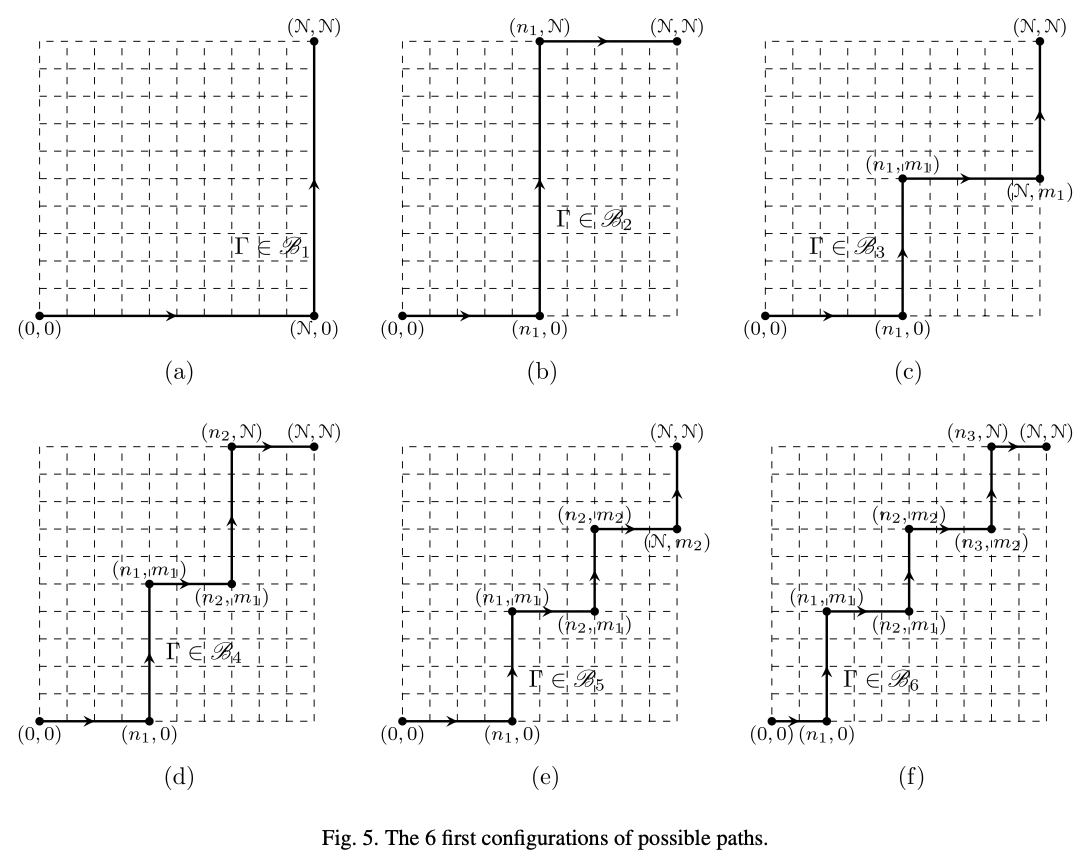
In quantum arena, the notion of integrability is not well established. Naively, one can follow the canonical quantisation by promoting a set of invariances or a set of Hamiltonians to be a set of Hamiltonian operators. Therefore, the integrability demands commutator of the Hamiltonian operators to be zero. However, Weigert provided a counter example, which is non-integrable system, satisfying the vanishing commutator condition. However, many attempts have been put further to investigate quantum integrability on demanding a quantum correction terms promoted from the invariances of the counterpart of classical system and commutations of them. In discrete level, a key tool to study quantum integrable systems, the quantum mapping, was established and was applied in the integrability context. Alternatively, Feynman approach on quantising the system might be a better choice. The pioneer works on this direction were investigated by Field and Nijhoff in the discrete systems. In 2019, King and Nijhoff set out to formulate quantum path integration incorporated with the quadratic Lagrangian multi-form structure in the discrete level.
Recently, we successfully construct the continuous multi-time propagator for the case of Lagrangian 1-forms, see “Quantum integrability: Lagrangian 1-form case” (2023). With this new type of the propagator, a new paradigm on summing over possible paths is introduced since one needs to take into account both all possible paths on the space of dependent variables and the space of independent variables. The integrability notion in terms of the multi-dimensional consistency is captured through the path independent feature of the evolution on the space of independent variables known as the quantum variational principle.
Of course, with this very first brick on constructing the propagator associated with Lagrangian 1-forms, one can pursue the higher-form case to establish the integrability condition.
Papers on this topic · 13
- 2025The q-deformed Calogero's Goldfish SystemsarXiv preprint
- 2024One-parameter discrete-time Calogero–Moser systemTheoretical and Mathematical Physics
- 2024Lagrangian 1-form structure of Calogero-Moser type systemsarXiv preprint
- 2023Quantum integrability: Lagrangian 1-form caseNuclear Physics B
- 2022Multitime propagators and the consistency conditionTheoretical and Mathematical Physics
- 2021Geodesic Compatibility: Goldfish SystemsReports on Mathematical Physics
- 2019Integrable Hamiltonian Hierarchies and Lagrangian 1-FormsarXiv preprint
- 2017On the Lagrangian 1-Form Structure of the Hyperbolic Calogero–Moser SystemReports on Mathematical Physics
- 2015On elliptic Lax systems on the lattice and a compound theorem for hyperdeterminantsJournal of Physics A: Mathematical and Theoretical
- 2015The Lagrangian structure of Calogero’s goldfish modelTheoretical and Mathematical Physics
- 2013Elliptic (N,N′)-soliton solutions of the lattice Kadomtsev-Petviashvili equationJournal of Mathematical Physics
- 2011Discrete-time Calogero–Moser system and Lagrangian 1-form structureJournal of Physics A: Mathematical and Theoretical
- 2011Discrete-time Ruijsenaars-Schneider system and Lagrangian 1-form structurearXiv preprint
Research topic · 02
Non-standard Lagrangian and its application in field theory
At the heart of modern physics lies the principle of least action. Given a physical system, one writes down a Lagrangian— a function encoding the system’s kinetic and potential energy — and the actual path nature takes is the one that minimises (or extremises) the accumulated sum of this function over time. This additive structure has been extraordinarily successful. It underlies classical mechanics, electrodynamics, general relativity, and the entire Standard Model of particle physics. Every field theory we trust is built on it. Yet the additive framework carries hidden assumptions. It privileges linear superposition, additive conservation laws, and a particular notion of what it means to “combine” two contributions. These assumptions are so deeply baked in that they are rarely questioned — which means the framework may be blind to structures that lie outside it.
In classical mechanics, Lagrangian is typically defined as the difference between the kinetic energy and potential energy of the system and we shall call this type of Lagrangians as a standard form. Inserting the Lagrangian into the Euler-Lagrange equation, one obtains the equation(s) of motion (EOM). Of course, a non-standard Lagrangian is the one that does not possess the usual form of the kinetic energy minus the potential energy. Such Lagrangians may contain additional terms, e.g. higher-order derivative terms, or may be defined in a completely different way. Non-standard Lagrangians also arise in the context of field theory to describe the interactions of particles and fields. Traditionally, higher-order derivative terms and complex interaction terms were added by hand without symmetry violation.
In 2016, Surawuttinack and Yoo-Kong proposed a new form of Lagrangian, called the multiplicative Lagrangian, in the case of one degree of freedom. Naively, this Lagrangian is in the product form between a function of velocity and a function of potential. A point is that Lagrangian has been treated as a solution of the Euler-Lagrange equation. Solving this new type of Lagrangian by employing the separation variable method, one obtains an explicit form. A key feature is that this multiplicative Lagrangian comes with a parameter and under an appropriate limit on this parameter, the standard Lagrangian is recovered. Moreover, if we consider the series expansion of the multiplicative Lagrangian with respect to the parameter, the Lagrangian hierarchy is constructed. Of course, all Lagrangians in the hierarchy give the identical EOM of the system. Then with this structure of the multiplicative Lagrangian, it would provide a new light to the non-uniqueness property of the Lagrangian. In other words, we find a systematical way to write various forms of the Lagrangian producing the same EOM.
We proposed replacing the additive Lagrangian with a multiplicative one. Rather than writing down a Lagrangian and deriving equations of motion, I start from the equations of motion themselves and ask: what Lagrangian — of a multiplicative form — would produce exactly these equations? This is the inverse problem of the calculus of variations, applied to a new class of action functionals. Crucially, the Lagrangian L here is not guessed or postulated — it is solved for, constructed to reproduce known physics under a multiplicative variational principle. This methodological inversion is not a technicality; it is what makes the framework genuinely new. You are not reformulating a known theory — you are uncovering a hidden Lagrangian structure that the standard additive approach could never see, because it never asks the inverse question.
Postulate an additive Lagrangian → derive the equations of motion.
Start from the equations of motion → solve for a multiplicative Lagrangian.
The standard model of particle physics (SMPP) is a well-established theory that describes the fundamental particles and their interrelations. However, there are some phenomena that cannot be explained by the SMPP, such as dark matter, dark energy, the hierarchy problem, strong CP problem, neutrino mass, quantising gravity and the baryon asymmetry problem. In the past years, physicists have proposed several theories that go beyond the SMPP, including:
Supersymmetry (SUSY)
This theory proposes that each known particle in the SMPP has a supersymmetric partner, which has a different spin. SUSY could solve the hierarchy problem and provide a candidate for dark matter.
Grand Unified Theories (GUTs)
These theories attempt to unify the strong, weak and electromagnetic interactions to a single framework. GUTs predict new particles and interactions, which could be observed at high energies.
Extra Dimensions
These theories propose that there may be more than the three spatial dimensions and one temporal dimension that we experience. Extra dimensions could explain why gravity is so weak comparing to other interactions and could also solve the hierarchy problem.
String Theory
This theory proposes that the fundamental building blocks of the universe is not particles, but tiny vibrating strings. String theory provides a way to construct a graviton. However, there is a price to pay which is an extra-dimension.
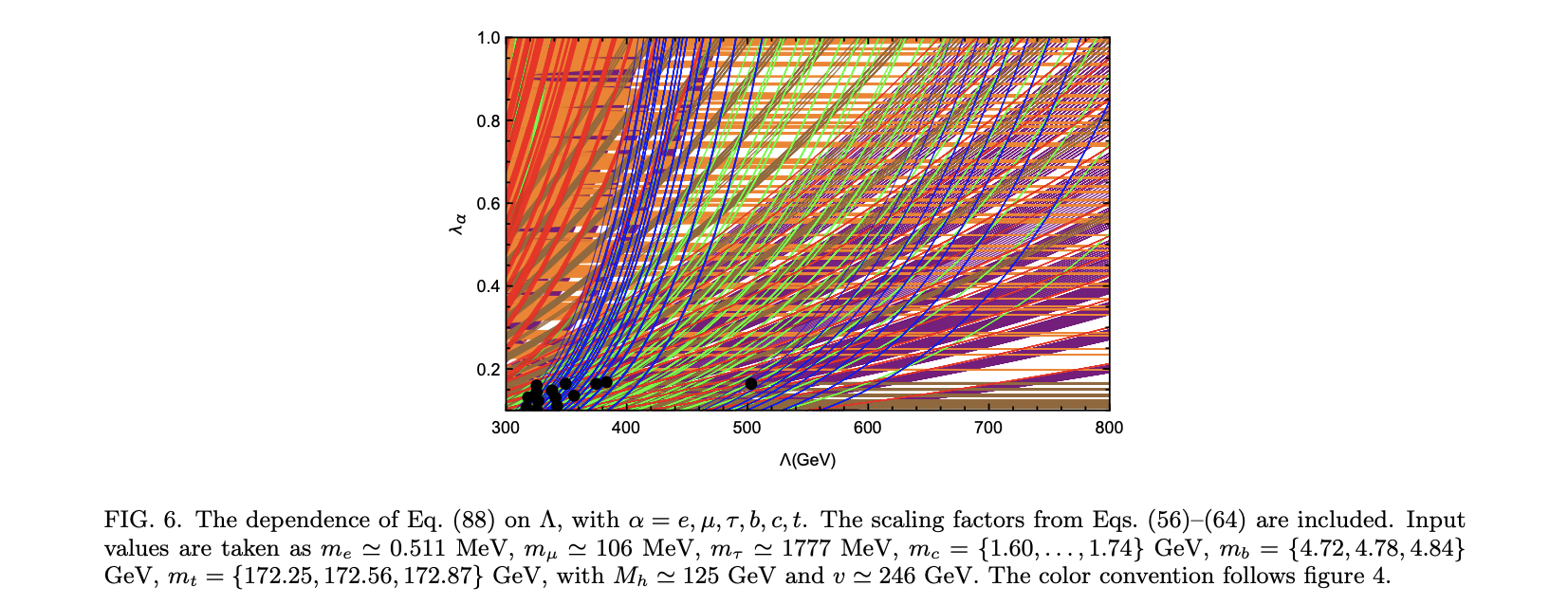
Recently, Supanyo and Yoo-Kong proposed a new form of the Lagrangian, namely the multiplicative form of the complex scalar field, to provide alternative explanation to the hierarchy problem and strong CP problem. For the hierarchy problem associated with the Higgs mass, the new form of the Lagrangian can provide a tiny quantum correction and a bare mass of the Higgs particle is in the same order with the observation 125 GeV. This means that, with this new way to write the Lagrangian, one needs no fine tuning. For the strong CP problem, our model can naturally explain the phenomenon without introducing a new hypothetical particle such as an axion.
With this new way of looking problems, there is a high potential for the multiplicative Lagrangian to give an alternative explanation to other problems in the realm of the beyond standard model of particles physics.
Papers on this topic · 9
- 2026Neutrino mass mechanisms from a nonstandard Higgs Lagrangian and implications for flavor hierarchiesInternational Journal of Modern Physics A
- 2026A multiplicative formulation of the Higgs Lagrangian and the fermion mass hierarchy between the charged leptons and heavy quarksInternational Journal of Modern Physics A
- 2026Relativistic Hamiltonian as an emergent structure from information geometryarXiv preprint
- 2025The Emergence of the Relativistic Lagrangian from the Non-Relativistic Multiplicative LagrangianFoundations of Physics
- 2024Nonstandard Lagrangians for a real scalar field and a fermion field from the nonuniqueness principleTheoretical and Mathematical Physics
- 2022Natural TeV cutoff of the Higgs field from a multiplicative LagrangianPhysical Review D
- 2019On the Nonuniqueness of the Hamiltonian for Systems with One Degree of FreedomProgress in Relativity
- 2017The multiplicative Hamiltonian and its hierarchyJournal of Physics: Conference Series
- 2016Multiplicative form of the LagrangianTheoretical and Mathematical Physics
Information geometry is a branch of mathematics that studies the geometric structure and properties of information spaces (probability manifolds). It is based on the idea that information can be represented mathematically as probability distributions, and that the properties of these distributions can be analysed using tools from differential geometry. In this context, probability distributions are treated as points in a geometric space, where the geometry of the space, e.g. curvature, is determined by the properties of the distributions. The distance between two points on the probability manifold is measured using a metric known as a Fisher-Rao matrix. Intriguingly, the matrix can be obtained from the Kullback-Leibler divergence, a.k.a the relative entropy, by considering the first order of the expansion if two points are infinitesimally close. Information geometry has a wide range of applications, ranging from statistical inference, machine learning to neural networks.
Recently, Bukaew and Yoo-Kong proposed a one-parameter Fisher-Rao matrix for one-random variable case. To obtain such a new Fisher-Rao matrix, one employs a connection between the action functional and Fisher information together with the multiplicative form of Lagrangian. Of course, under an appropriate limit on the parameter, a standard Fisher-Rao matrix is recovered. Moreover, if we consider a series expansion with respect to the parameter, one obtains the metric hierarchy and, of course, the standard Fisher-Rao metric is the first one in the hierarchy. An interesting feature is that this new Fisher-Rao matrix comes with the parameter which could be treated as a Tsallis’s index connecting with non-additivity property.
Of course, one can try to extend the idea to the case of many random variables. The application of this new type of Fisher-Rao matrix is still open. However, one active research area to understand a nature of spacetime is the emergent phenomenon of space and time from information might be found a usefulness from this one-parameter Fisher-Rao matrix. Specifically, one can derive the Einstein field equation from Fisher information. Then one could ask what would we obtain with the one-parameter Fisher information?
Papers on this topic · 3
- 2026Relativistic Hamiltonian as an emergent structure from information geometryarXiv preprint
- 2023ONE-PARAMETER GENERALISED FISHER INFORMATION MATRIX: ONE RANDOM VARIABLEReports on Mathematical Physics
- 2022The q-Deformed Hamiltonian, Lagrangian, Entropy and Fisher InformationFixed Point Theory and Fractional Calculus: Recent Advances and Applications (Forum for Interdisciplinary Mathematics book series
Quantum thermodynamics is a branch of physics that combines the principles of quantum mechanics and thermodynamics to describe the behaviour of small, quantum mechanical systems. It aims to extend the laws of thermodynamics to the microscopic world of individual atoms and particles, where quantum effects are playing a key role e.g. entanglement. Classically, the second law of thermodynamics states that in any natural thermodynamics process, the total entropy, defined through heat and temperature of the system, of a closed system will always tend to increase over time. Entropy can be thought of as a measure of the randomness of a system, and the second law implies that over time, natural processes will tend to move towards states of greater entropy. In quantum thermodynamics, the concepts of works, heat, and energy are redefined in terms of the underlying quantum mechanics of the system, e.g. work is defined as the change in energy of a quantum mechanical system caused by the manipulation of its Hamiltonian, while heat is defined as the energy exchange between a quantum systems and its environment due to temperature differences.
Recent developments in this context show that the second law of thermodynamics seems to be possibly violated. In simple words, in quantum realm, heat can naturally flow from a cold body to a hot body. However, in fact, the second law of thermodynamics is still intact since one needs to take into account the consumption of entanglement between the hot and cold bodies. The entropy of spending entanglement of the system will compensate the missing entropy and, therefore, entropy of the whole system will increase while the heat flows backwards.
Related papers on entanglement · 3
- 2024Spatial entanglement between two quantum walkers with exchange symmetric coinsPhysics Letters A
- 2017Ground state entanglement entropy for discrete-time two coupled harmonic oscillatorsJournal of Physics: Conference Series
- 2014Entanglement entropy for a particle coupled with its surroundingBulg. J. Phys
Research topic · 05
Lagrangian description in thermodynamics and classical statistical mechanics
Traditionally, in thermodynamics, the way to describe the system is through the equation of state (EOS). There is not equation of motion (EOM) of the system like those in the classical mechanics as a result of least action principle. However, with notion of differential forms, one can analogy the EOS in thermodynamics with EOM in classical mechanics. This might give us a way to construct a new way to study thermodynamics in the same language with the classical mechanics while keeping path-independent feature of the thermodynamic process intact.
Recently, I myself come up with the idea (preliminary) how to capture the path-independent feature of the thermodynamic process with the Lagrangian description, see “The action principle for equilibrium thermodynamics”.
Very recently, I figure out how to formulate the classical statistical ensemble with the Lagrangian formalism. A key magic trick is a Wick’s rotation, like those in the case of the path integration but there is a difference, allowing us to formulate the Lagrangian version of the Liouville’s theorem. Therefore, a definition of the microcanonical and canonical ensembles can be defined. With a simple system, one dimension harmonic oscillator, we can show that on computing physical quantities, e.g. entropy and partition function, both Hamiltonian and imaginary-time Lagrangian give identical results, see “Lagrangian formalism and classical statistical ensemble”.
Papers on this topic · 4
- 2026Maxwell's relations as Hamilton's equations: a symplectic and variational frameworkarXiv preprint
- 2024The Action Principle for Equilibrium ThermodynamicsIranian Journal of Science
- 2024Deriving Tsallis entropy from non-extensive Hamiltonian within a statistical mechanics frameworkarXiv preprint
- 2023Lagrangian formalism and classical statistical ensemblearXiv preprint
Research topic · 06
Quantisation of the thermodynamic systems
Thermodynamics is the branch of physics that deals with heat, work, and the forms of energy transfer within physical systems at the macroscopic level. It focuses on how energy moves between different states and how it impacts matter, particularly in terms of changes in temperature, pressure, and volume. Thermodynamics is governed by a set of fundamental principles known as the Four Laws of Thermodynamics, which describe how these quantities behave in various situations.
A question: Can thermodynamics go quantum? Well…. Yes. And this field is rapidly flourishing.
Quantum thermodynamics is a field of study that combines principles from quantum mechanics and thermodynamics to understand how energy, work, and heat behave in systems governed by quantum laws. It extends classical thermodynamics to the quantum scale, where the behavior of particles and energy levels are fundamentally different due to quantum effects like superposition, entanglement, and discreteness of energy states.
However, what I have in mind is not exactly the same thing above. My question is “Can we quantise a thermodynamic system?” This question might sound weird since thermodynamics is dealing with large classical systems, one might wonder what do you mean by saying about its quantum version. An interesting fact is that there is analogue structure between Hamiltonian mechanics and Thermodynamics, see John Baez. This intriguing connection would allow us to construct the thermodynamic phase space and of course, possibly, one might try to construct a quantum theory from this structure, like we did in the case of the classical mechanics.
Research topic · 07
Any topic that I can do math!
Join the group
MSc and PhD research topics are available
- MSc/PhD research topics are available.
- Self-funded or externally sponsored students are welcome to join the project.
- Partially-funded scholarships are available for PhD students.
Also
Earlier and related work
Path integrals & condensed matter
Polarons, bipolarons, charge transport and PT-symmetric oscillators treated with single- and double-path-integral methods — the starting point of the work.
Show papers · 6
- 2015Double path integral method for obtaining the mobility of the one-dimensional charge transport in molecular chainThe European Physical Journal E
- 2010THE PATH INTEGRAL APPROACH TO AN N-PARTICLE IN A PT-SYMMETRIC HARMONIC OSCILLATORInternational Journal of Modern Physics B
- 2008The impedance function of a confined polaron and bipolaron: The single-path-integral approachPhysica B: Condensed Matter
- 2007The single-path-integral approach to the steady-state condition: Alternative derivation of the Thornber theoryPhysica B: Condensed Matter
- 2007On the ground-state energy of a bound polaron in quantum confinementPhysica B: Condensed Matter
- 2006The Propagator for a charged particle in an electromagnetic field and a series of non-local harmonic OscillatorsJournal of the Korean Physical Society
Quantum operations
Fixed points and compositions of quantum operations.
Show papers · 2
- 2021Composition of Quantum Operations and Their Fixed PointsData Science for Financial Econometrics — Studies in Computational Intelligence
- 2020Some Generalised Fixed Point Theorems Applied to Quantum OperationsSymmetry
Gravity, the Higgs mechanism & cosmology
Spontaneous symmetry breaking from the non-minimal coupling of gravity to a scalar field, linking inflation and the electroweak phase transition.
Show papers · 1
Selected publications
- 2011Discrete-time Calogero–Moser system and Lagrangian 1-form structureSikarin Yoo-Kong, Sarah Lobb and Frank Nijhoff · Journal of Physics A: Mathematical and Theoretical
- 2016Multiplicative form of the LagrangianKittikun Surawuttinack, Sikarin Yoo-Kong and Monsit Tanasittikosol · Theoretical and Mathematical Physics
- 2022Natural TeV cutoff of the Higgs field from a multiplicative LagrangianSuppanat Supanyo, Monsit Tanasittikosol and Sikarin Yoo-Kong · Physical Review D
- 2023Quantum integrability: Lagrangian 1-form caseThanadon Kongkoom and Sikarin Yoo-Kong · Nuclear Physics B
- 2023ONE-PARAMETER GENERALISED FISHER INFORMATION MATRIX: ONE RANDOM VARIABLEWorachet Bukaew and Sikarin Yoo-Kong · Reports on Mathematical Physics
Research grants
- 2012King Mongkut’s University of Technology Thonburi Research Grant
- 2013Thailand Toray Science Foundation (TTSF)
- 2013Faculty of Science, King Mongkut’s University of Technology Thonburi Research Grant
- 2013The Thailand Research Fund (TRF): New Researcher
- 2013National Research Council of Thailand (NRCT)
- 2014National Research Council of Thailand (NRCT)
- 2015National Research Council of Thailand (NRCT)
- 2017National Research Council of Thailand (NRCT)
- 2019–2020JSTP